
Best Emergency Food Bars for 2-Weeks for Earthquakes and Power Outages

[Tap to Watch Video]
Build a 2-week emergency food supply for earthquakes, power outages, disasters, and family preparedness using long-lasting emergency foods that are easy to prepare at home.
A two-week food supply sounds simple, but comparing calories, protein, shelf life, water needs, cooking, taste, and cost gets complicated quickly. We’ve done the research, hands-on testing, and trial and error to help you save time, avoid wasting money, and choose foods your family will actually eat.
This video covers ready-to-eat food bars, freeze-dried meals, shelf-stable pantry foods, canned meats, rice, freeze-dried fruits and vegetables, MREs, and survival food options, plus no-cook meals, backup cooking, and a simple 2-week emergency meal plan.
Below are links to the products featured in the YouTube video, along with a written blog version at the bottom of this page covering the same emergency food recommendations.
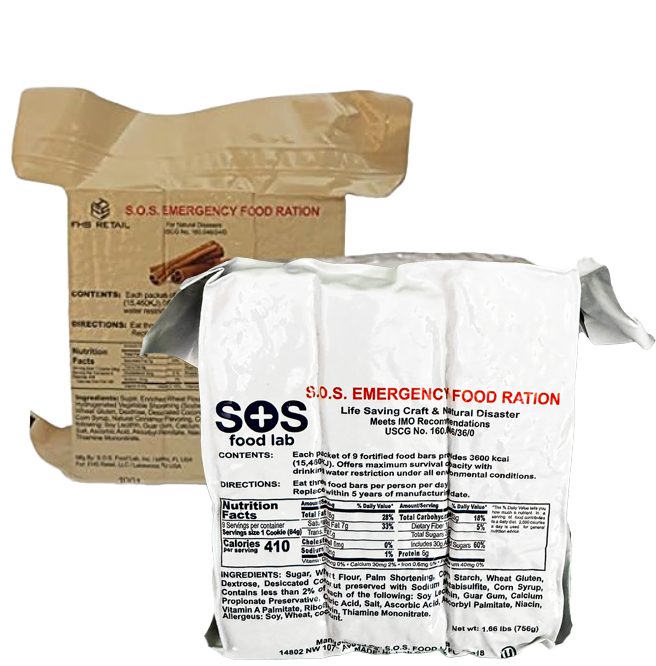
- 5-Year Shelf Life
- 7200 Calories - 1 person for 3 days
- 1 person for 3 days
- Best overall value
- No Cooking or preparation
- Link to Amazon.com (7200 calories)
- Link to MorePrepared.com (3600 calories)
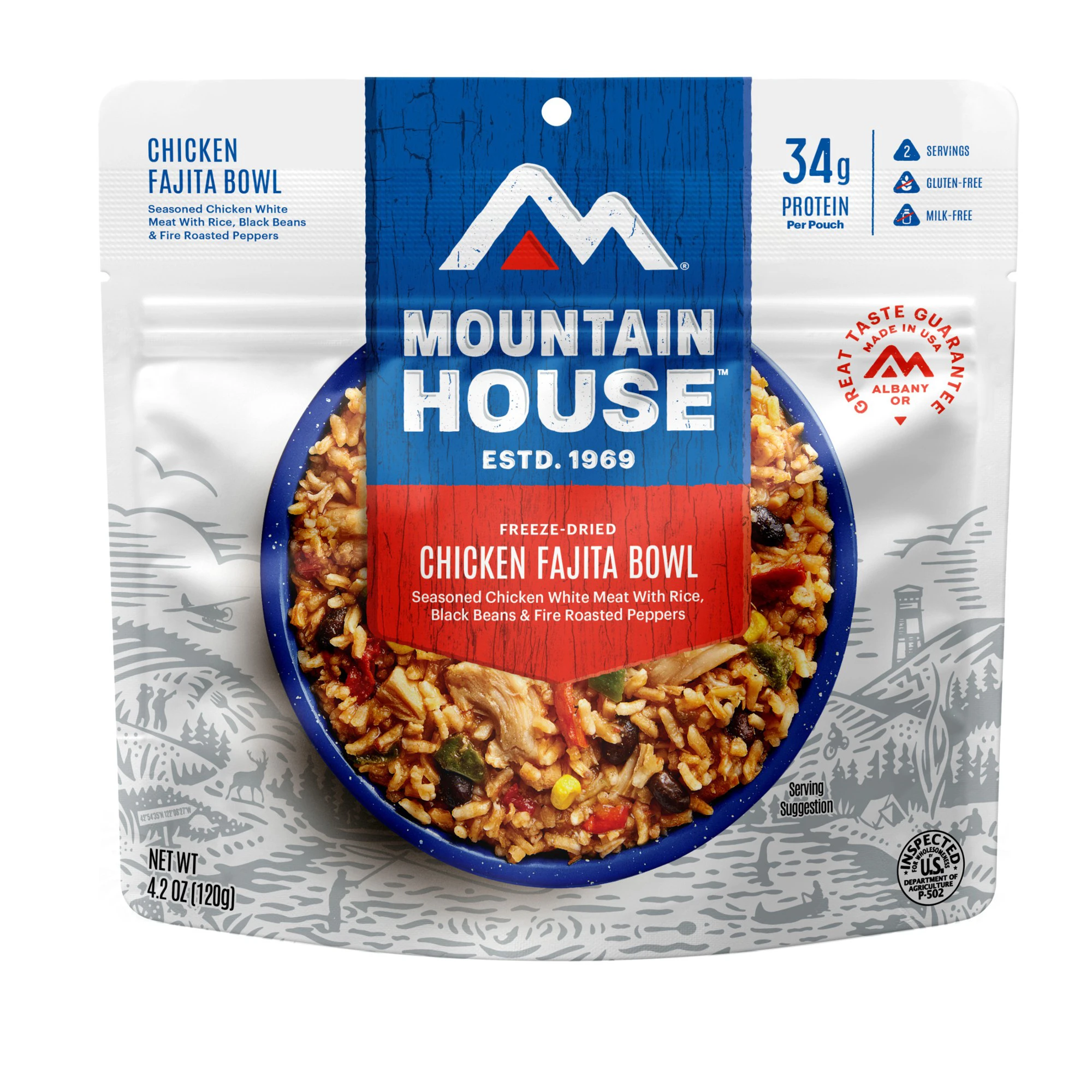
- 30-Year Shelf Life
- 500 Calories (approx.) per pouch
- 1 meal per pouch
- Easy to Prepare & No Dishes
- Good Taste and Variety
- Good Cold Soaking Meals: Granola, Chicken Teriyaki
- Requires Water to Rehydrate
- Boiling Water Needed for Good Taste for most meals
- Link to Mountain House
- Link to Mountain House Pro Paks
- Link to Mountain House Pro Paks from Go Hunt (cheaper)
- Link to REI
- Link to Walmart 3-Day 1 Person Kit
- Link to Costco 5-Day 1 Person Kit
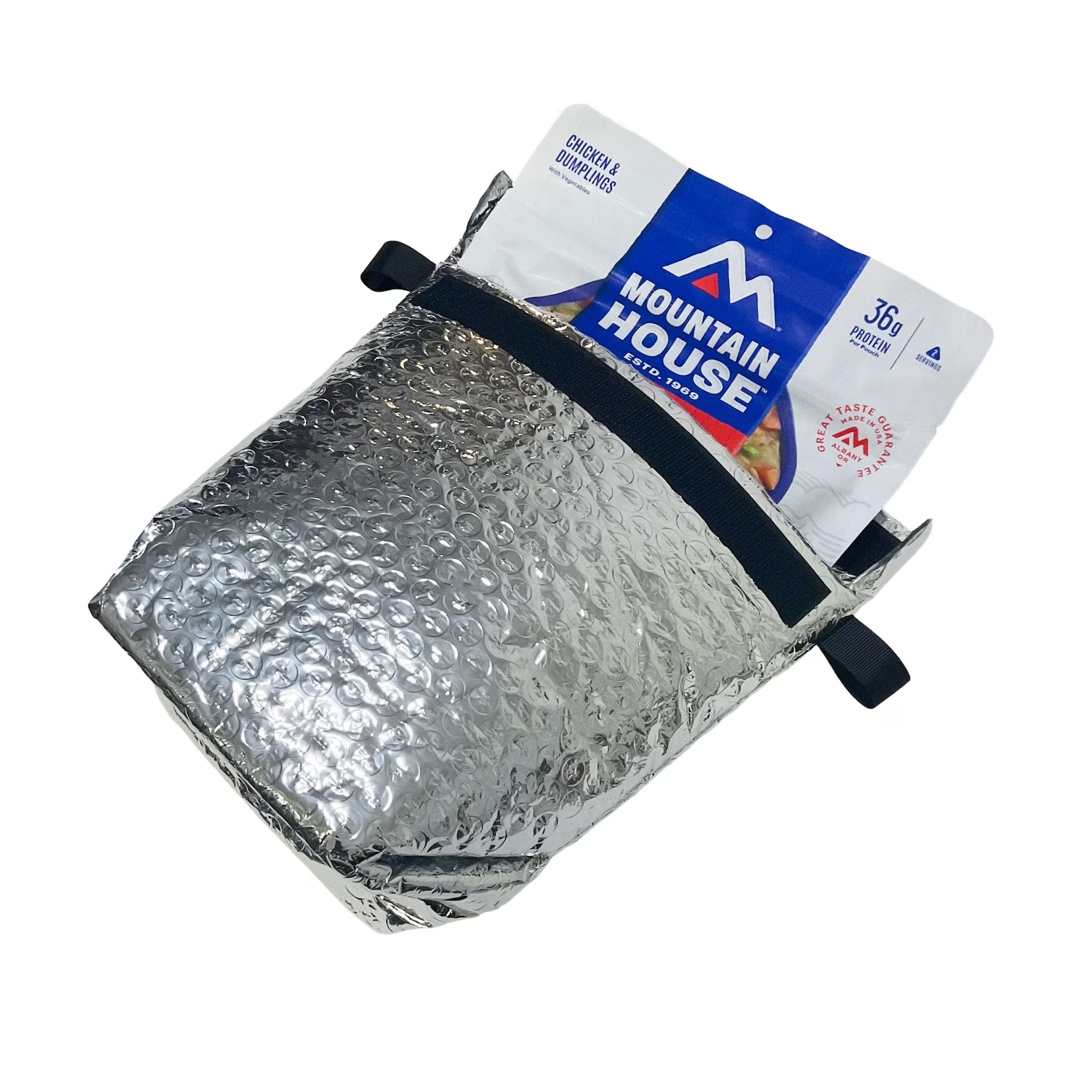
- Keeps Meals Warm
- Faster Rehydration with hot water
- Link to Etsy
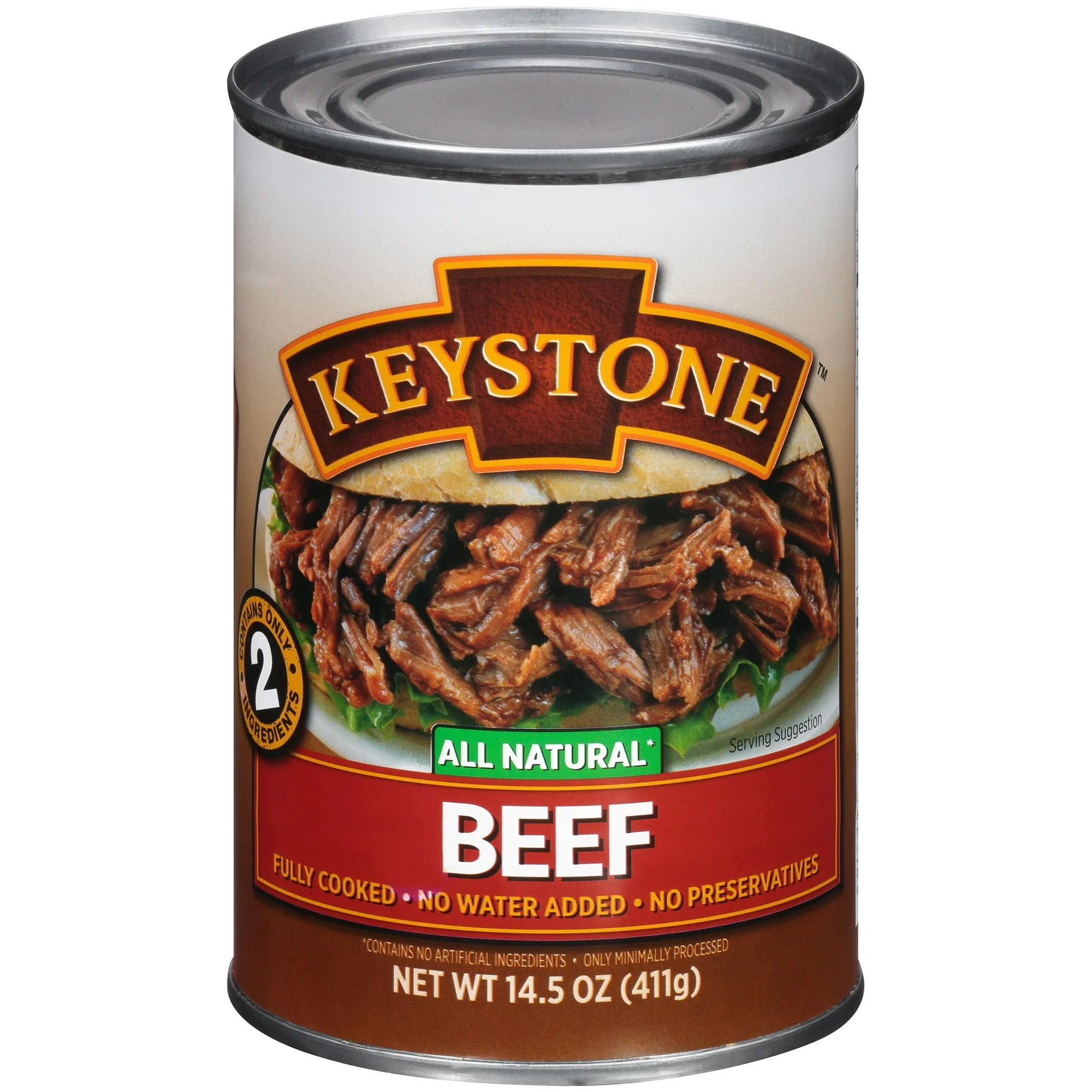
- 5-Year Shelf Life
- About 500 calories and 90 grams protein per 14.5 oz can
- Can last longer if properly stored
- High Protein and calories
- Pre-cooked. Can be eaten cold
- Link to Walmart
- Link to Walmart Beef 14.5oz
- Link to Walmart Chicken 14.5oz
- Link to Amazon
- Link to Keystone Custom Bundle 12 cans 14.5 oz
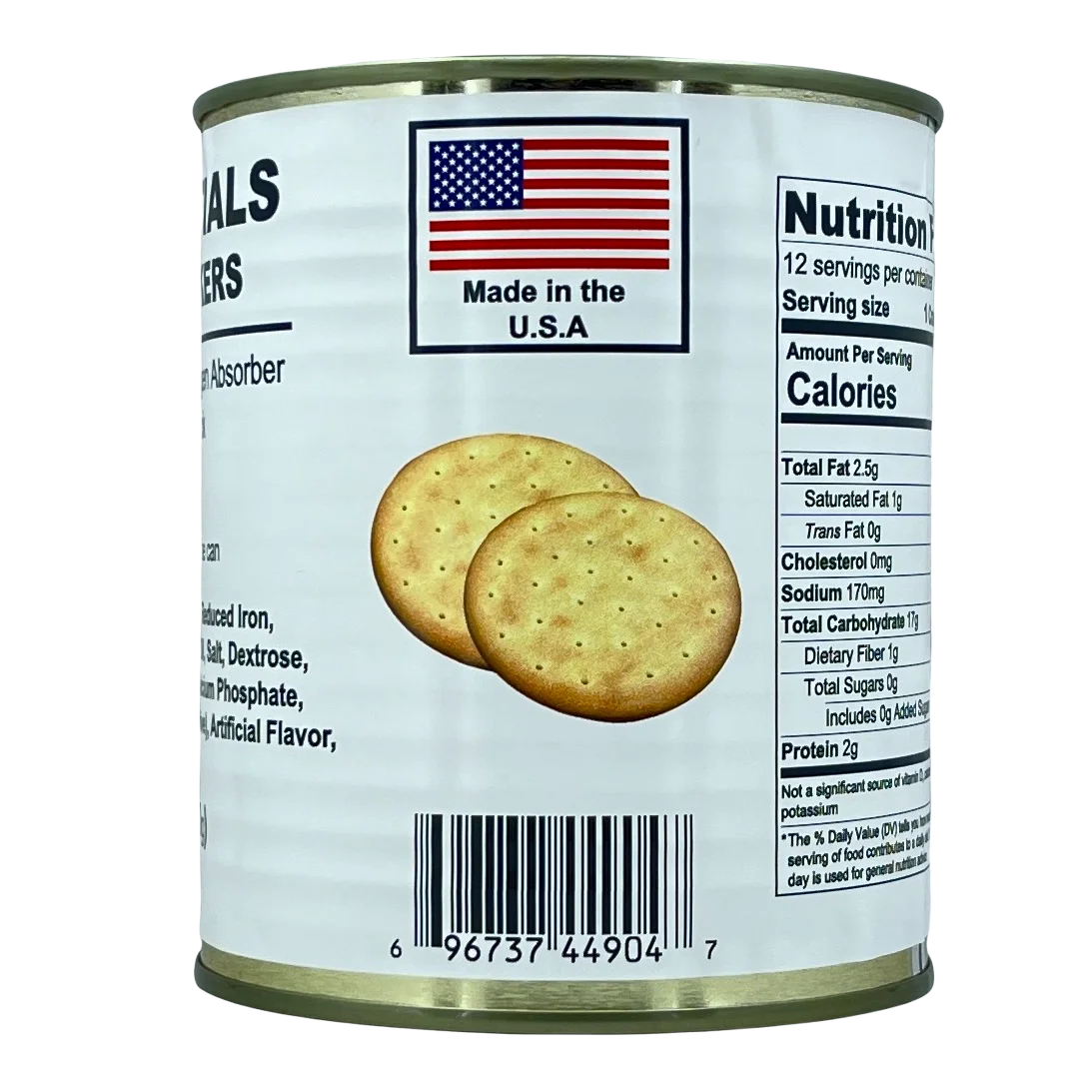
- 30-Year Shelf Life
- 1200 calories per can
- No Cooking or Preparation
- Goes well with pure honey for breakfasts
- Goes well with Keystone meats for no-cook dinner
- Link to Walmart (6-pack much cheaper per can)
- Link to MRE Depot
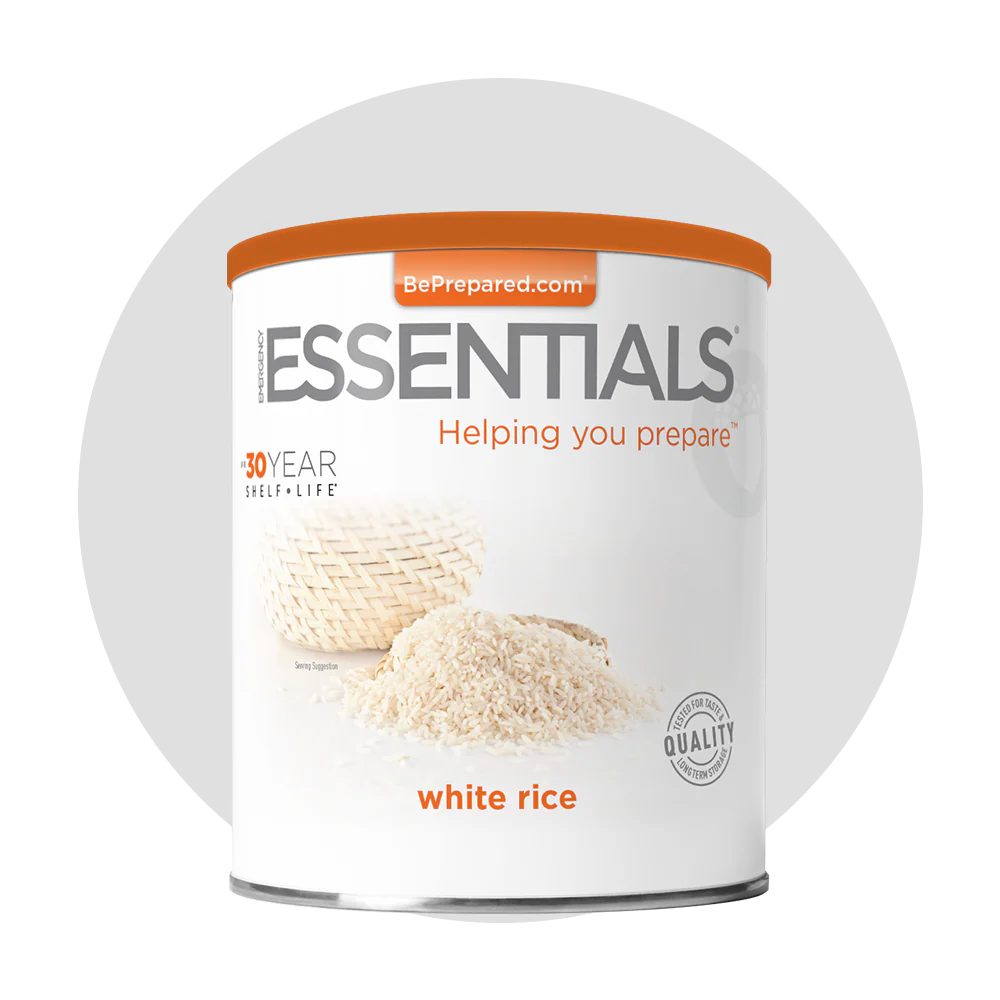
- 30-Year Shelf Life
- 8460 calories per can
- Requires Water & Cooking
- Link to BePrepared.com
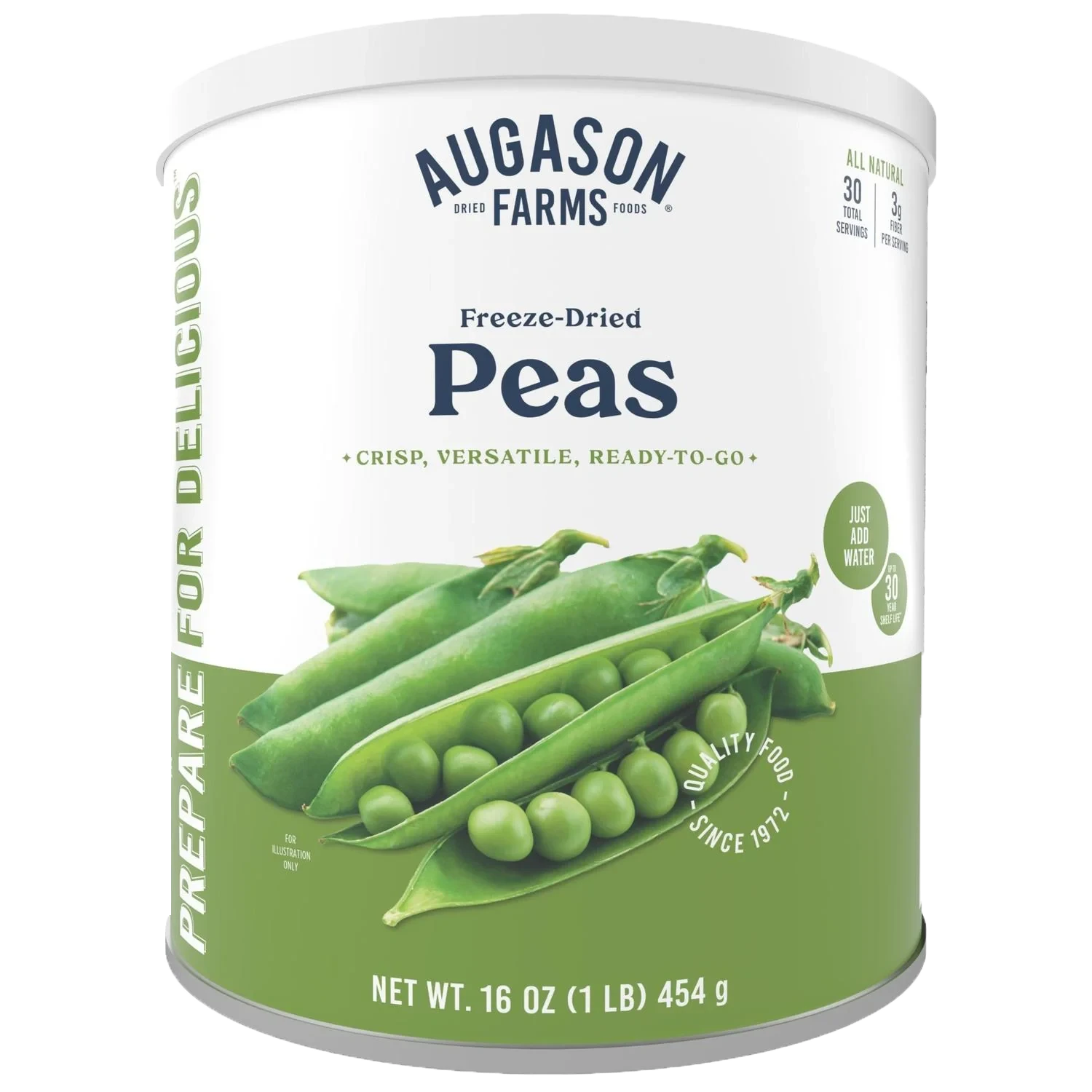
- 25-Year Shelf Lifes
- No Cooking for Blueberries & Peas
- Cooking for Broccoli
- Augason Farms #10 Cans Fruits and Vegetables
- BePrepared #10 Cans of fruits
- BePrepared #10 Cans of vegetables
- Walmart Nutristore Peas
- Walmart Nutristore Broccoli
- Walmart Nutristore Blueberries
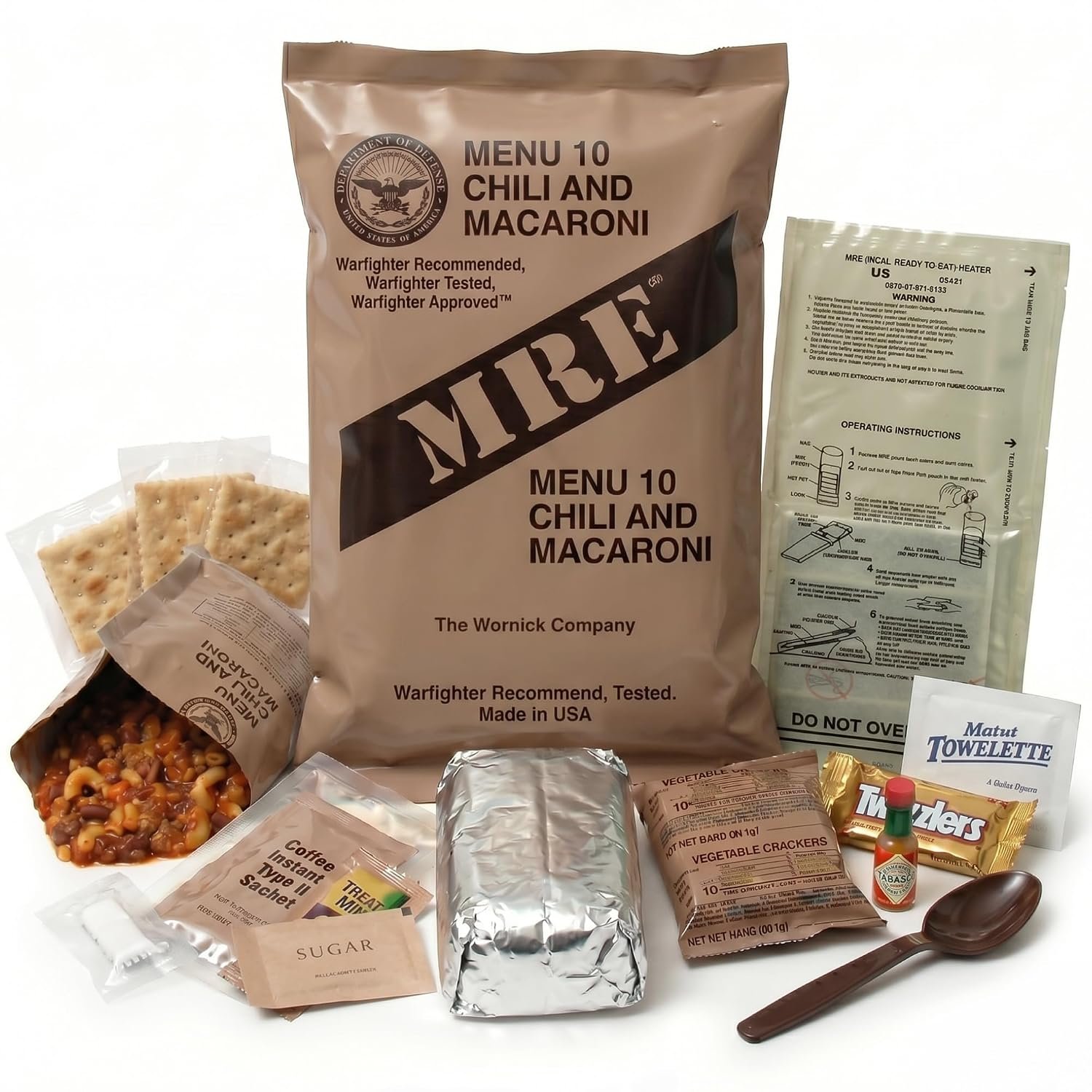
- Up to 5-Year Shelf Life
- 1250 calories per meal
- Comes with Heater (No other cooking required)
- Includes snacks, drink mix and sides
- Link to Offbase (Freshly Packed) 12 Meals
- Link to Meal Kit Supply 12 Meals (Free Shipping)
- MRE Depot
- Amazon (not new)
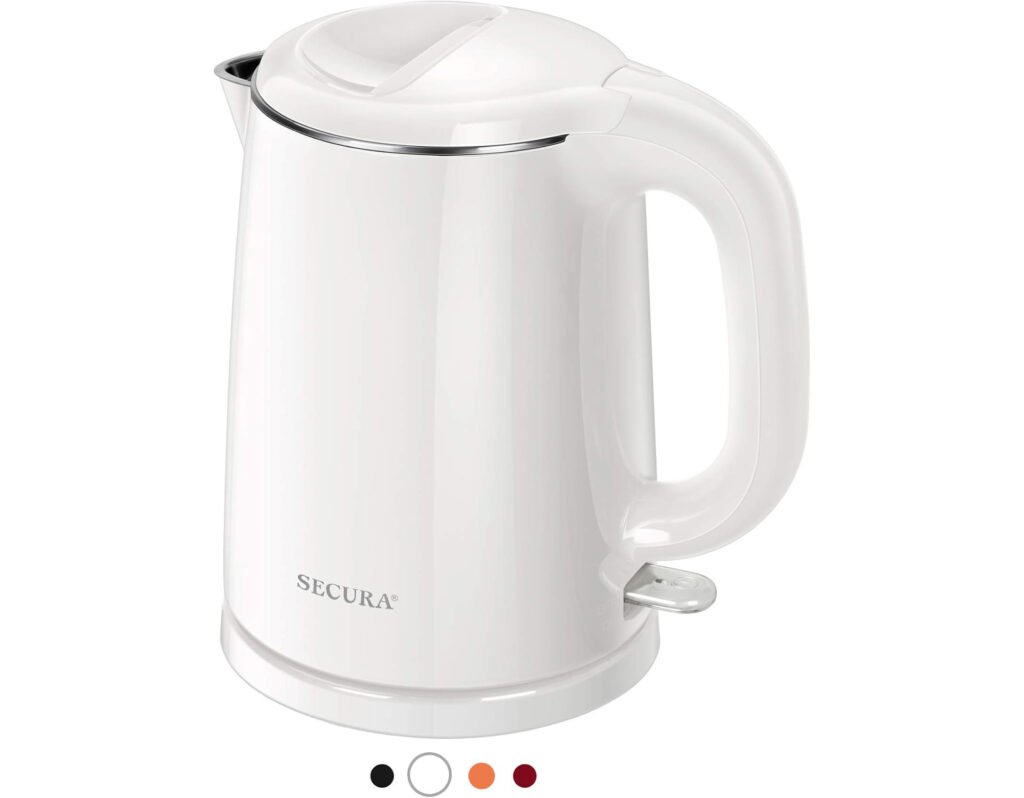
- Most Efficient for Boiling Water
- 1000 Watts
- Automatic Shutoff
- Stainless steel interior
- Link to Amazon
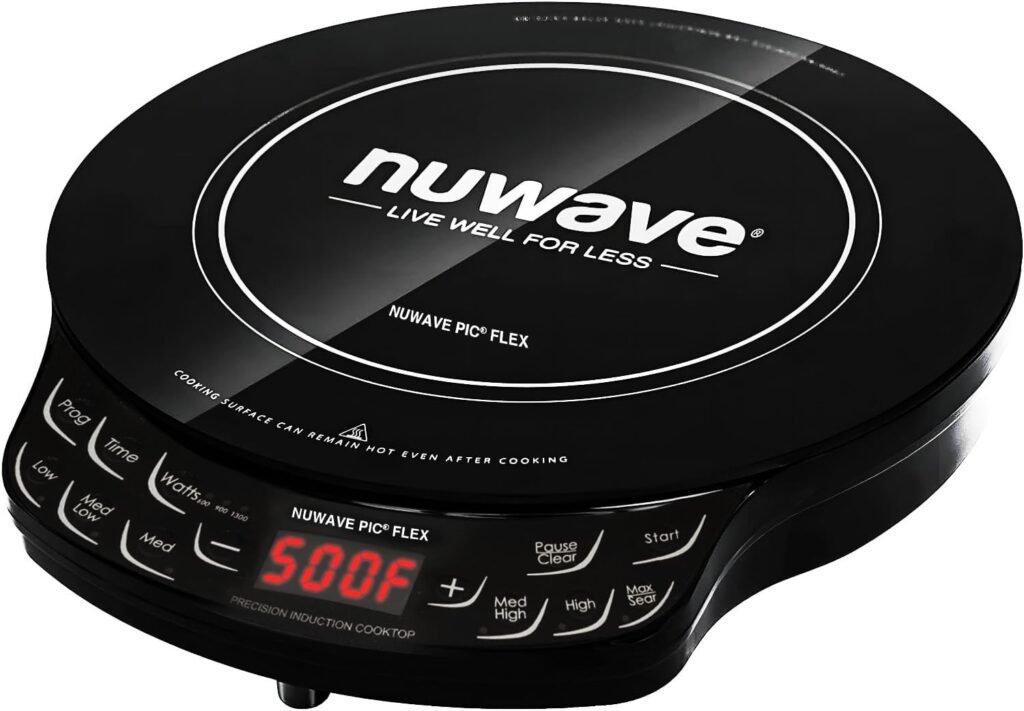
- Very Efficient for Boiling Water
- Good for warming up meat, frying
- Adjustable Wattable 600, 900, 1300
- Shatter-Proof Ceramic Glass
- 6.5" Heating Coil, 10.25" Cooktop
- Link to Amazon
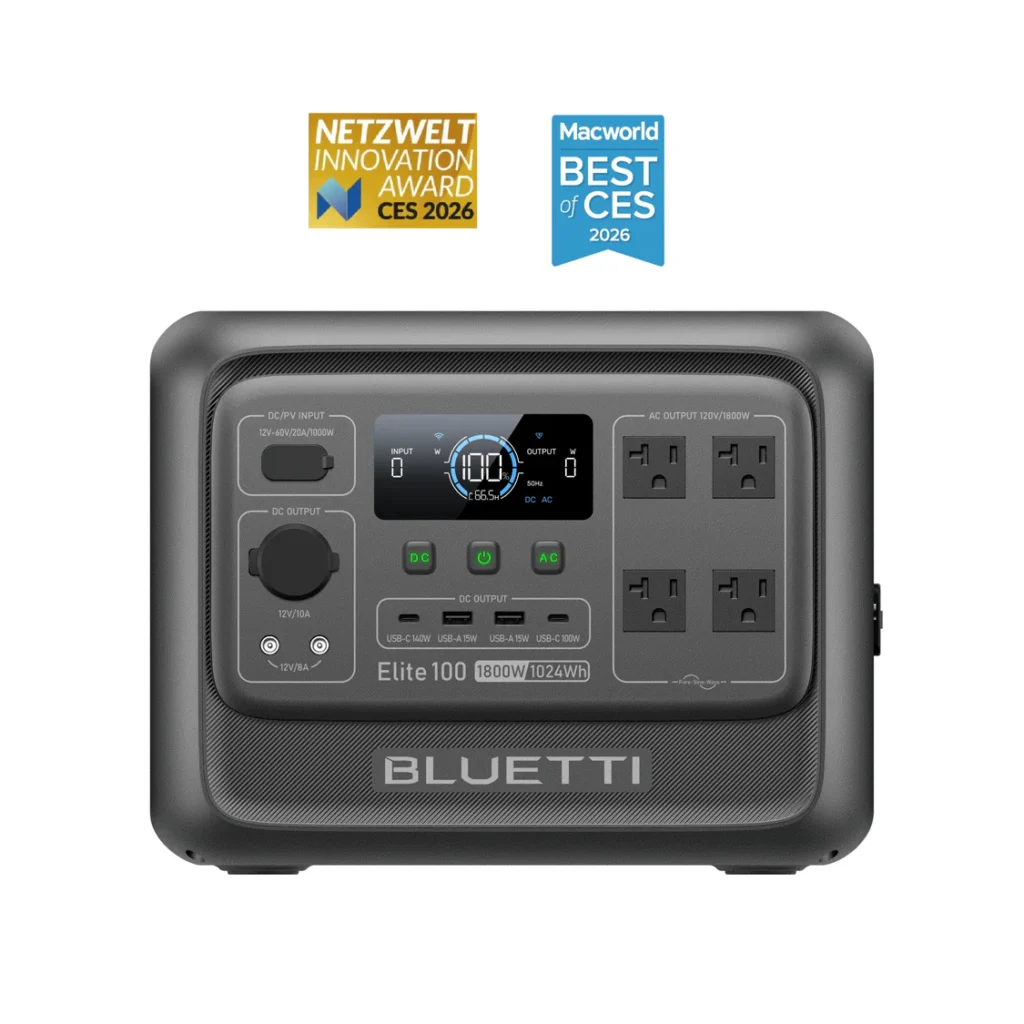
- Typically Retain 95% charge for a year
- 1500 - 1800 Watt Output
- Can be used as a UPS for modem, security system & PC
- Best Brands: Pecron, Bluetti, Anker, Ecoflow, Jackery
- Link to Reviews
- Link to Amazon 1000 Wh Power Stations
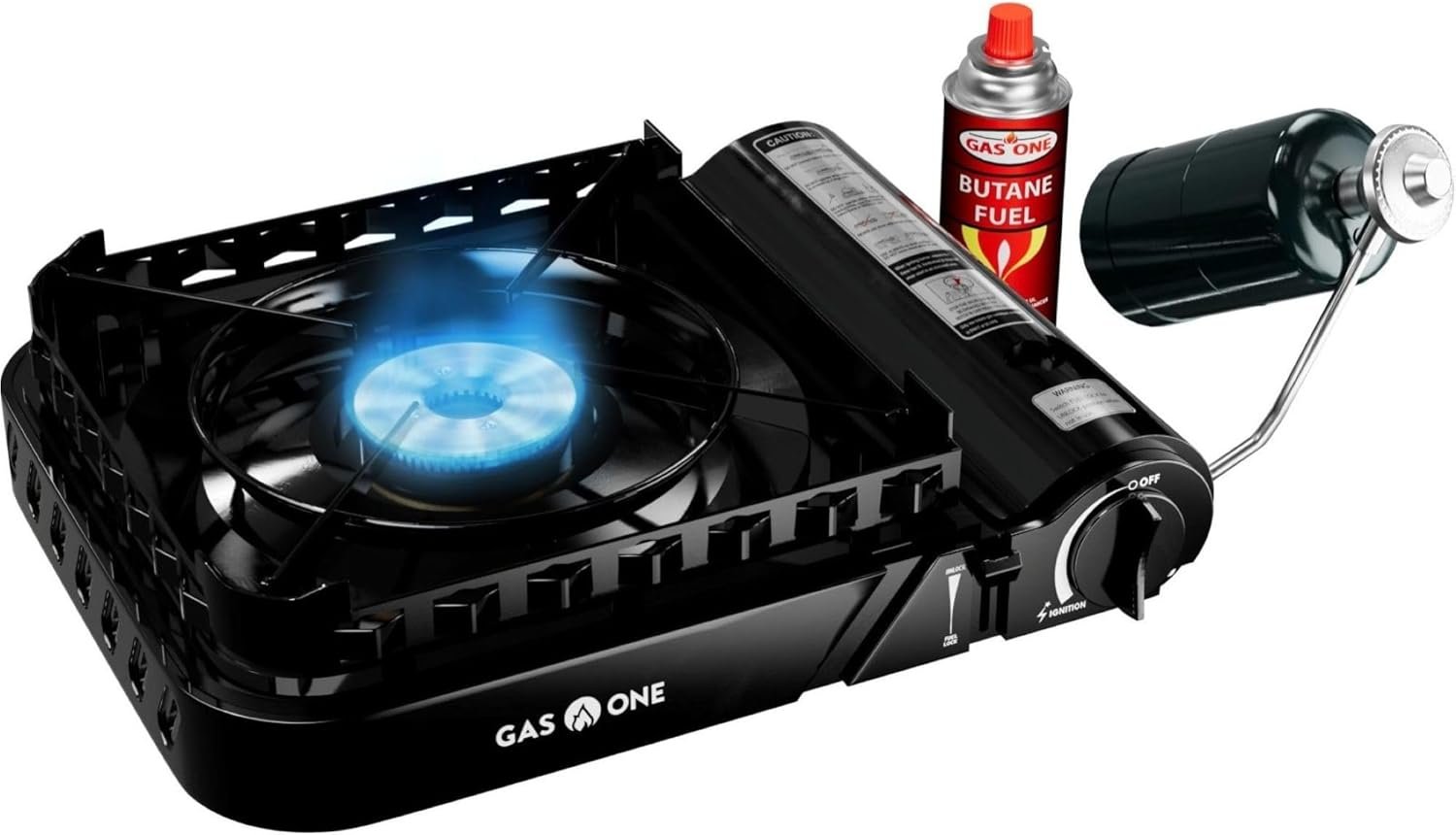
- Outdoor Use Only
- Follow manufacturers safety directions
- Takes both butane and propane fuel
- Very popular
- Link to Review Video
- Link to GasOne
- Link to Amazon.com
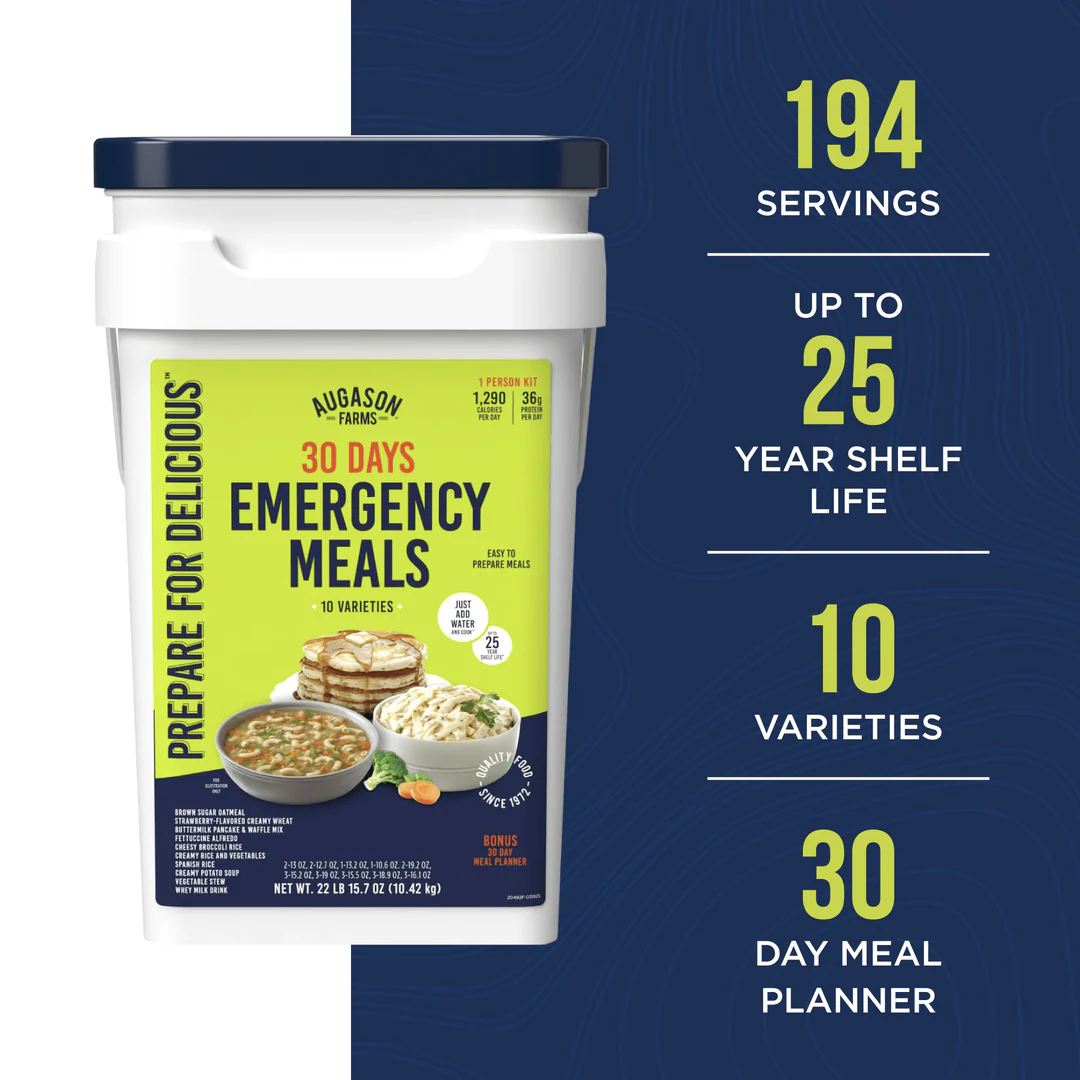
- Up to 25-Year
- 38,700 Calories (about 2.7 weeks of calories for 1 person)
- Inexpensive for total calories
- Requires Cookware, Offgrid Cooking and Cleanup
- Food May Taste Bland
- Link to Augason Farms Meal Kits
The Blog below covers the same info as the video above.
Best Emergency Foods for Earthquakes & Power Outages: Simple 2-Week Plan
After a major earthquake or extended power outage, your family could be stuck at home without electricity, gas, refrigeration, and closed stores. That is why it is important to have a practical emergency food supply before the disaster happens.
Building a two-week food supply sounds simple, but once you start comparing calories, protein, shelf life, water needs, cooking requirements, taste, and cost, it gets complicated quickly.
At California Home Resilience, we’ve done the research, hands-on testing, and years of trial and error so you can save time, avoid wasting money, and choose long-lasting emergency foods your family will actually eat.
This guide covers four types of emergency food you can use to build a two-week supply:
- Emergency food bars
- Freeze-dried meals
- Shelf-stable pantry staples
- MREs, or meals ready to eat
The best choice depends on your family’s budget, tastes, storage space, water supply, and whether you have a backup cooking method.
How Much Emergency Food Do You Need for Two Weeks?
After a major earthquake or extended power outage, your family could be stuck at home without electricity, gas, refrigeration, and closed stores.
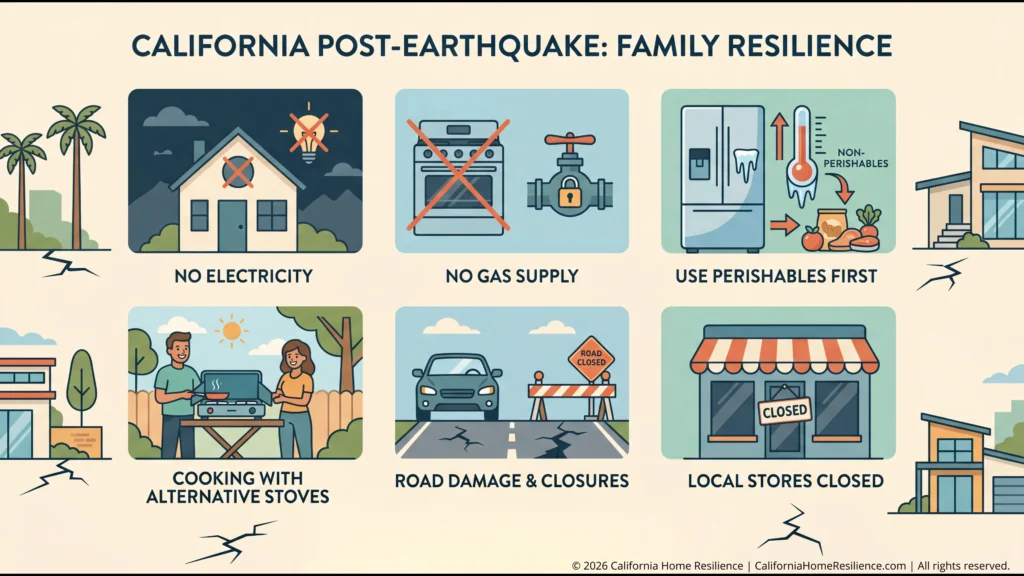
That’s why agencies like the American Red Cross, Cal OES and FEMA recommend keeping a two-week supply of non-perishable food for at-home emergencies.
A good planning target is about 2,000 calories per adult per day.
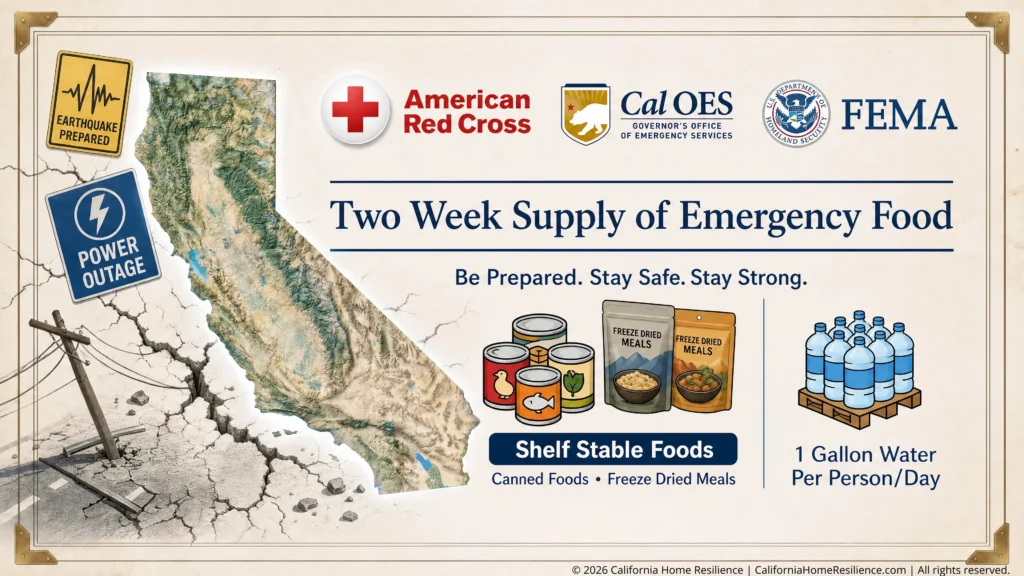
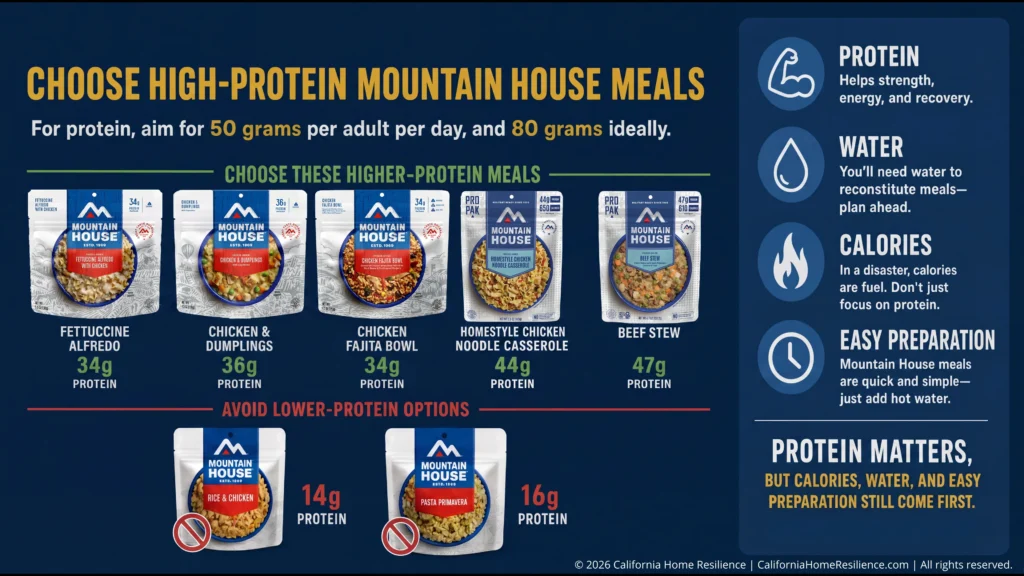
For protein, aim for at least 50 grams per adult per day, and closer to 80 grams if you can, especially for older or physically active adults.
But don’t let those numbers scare you. Once you break your emergency food supply into a few simple categories, building a practical two-week supply becomes much easier.
The most important thing is to have enough food stored before the emergency happens. You can always improve your system over time.
Type 1: Emergency Food Bars
Emergency food bars are one of the easiest ways to add reliable calories to your home emergency kit.
I like SOS emergency food bars as a fast, ready-to-eat foundation for emergency calories. They are compact, relatively inexpensive, and have a five-year shelf life.
For a two-week emergency food system, food bars work best for:
- Lunch
- Snacks
- Backup calories
- No-cook meals
- The first few days after a disaster
Three 410-calorie mini bars provide more than 1,200 calories, which covers a big part of the day without cooking. In some meal plans, you can add a fourth bar for breakfast.
The downside is that most families will not want to live on emergency bars alone for two weeks. For dinner, you will probably want something warmer, tastier, and more like a real meal.
That is where freeze-dried meals come in.
Type 2: Freeze-Dried Meals
Freeze-dried meals are one of the best upgrades for a home emergency food supply.
My favorite option is Mountain House because the meals are warmer, tastier, and more like real food compared with emergency bars.
Mountain House provides a 30-year taste guarantee for meals when kept unopened, undamaged, dry, and away from prolonged heat above 75°F. That makes them excellent for long-term emergency food storage.
The Catch: Freeze-Dried Meals Usually Need Hot Water
Freeze-dried meals work best with boiling water.
If the power is out, that could mean:
- An outdoor camp stove with fuel
- A power station with an induction cooktop
- A power station with an electric kettle
- Another safe backup cooking setup
To prepare most freeze-dried pouches, you add hot water directly to the pouch, wait the suggested time, and eat directly from the pouch. That saves water and reduces cleanup.
I usually double the suggested wait time to get fuller hydration.
In a true emergency, many freeze-dried meals can also be cold-soaked. They take longer and usually do not taste as good, but it can work. I tested Mountain House Chicken Teriyaki with room-temperature water, and it tasted fine.
Choosing Higher-Protein Freeze-Dried Meals
Protein matters in a disaster, but calories, water, and easy preparation still come first.
Most Mountain House dinner pouches can work with these plans, but I would avoid lower-protein dinner options like regular Rice & Chicken and Pasta Primavera if protein is a priority.
Instead, choose higher-protein meals when possible, especially some of the Pro-Paks.
Freeze-Dried Breakfast Options
For breakfast, Mountain House Granola with Milk and Blueberries is one of the easiest emergency options. It only needs half a cup of cold water, has no soak time, and provides about 500 calories per pouch.
That makes it an ideal emergency breakfast.
For a higher-protein breakfast, Mountain House Breakfast Skillet has about 28 grams of protein and similar calories, but it needs more water, requires boiling water, and has a minimum soak time of about nine minutes. You may want to double that wait time for better hydration.
Simple 2-Week Freeze-Dried Meal Plans
Here are two simple ways to use freeze-dried meals and emergency food bars for one adult.
Lower-Cost Plan
Use:
- One Mountain House pouch per day for dinner
- Four mini SOS bars for breakfast and lunch
That gives about 2,000 calories per day.
For two weeks, that means:
- 14 Mountain House dinners
- Three 3,600-calorie SOS ration two-packs
More Balanced Plan
Use:
- One Mountain House breakfast pouch
- One Mountain House dinner pouch
- Three mini SOS bars for lunch and snacks
For two weeks, that means:
- 14 Mountain House breakfasts
- 14 Mountain House dinners
- Two 3,600-calorie SOS ration two-packs
This version costs more, but it is tastier and more balanced.
To save money, shop around. Mountain House pouches are sometimes discounted through REI, the Mountain House website, Walmart, or Costco. REI may also provide an end-of-year member rebate.
Type 3: Lower-Cost Shelf-Stable Staples
Freeze-dried pouches are convenient, but they can get expensive for a family.
The cheapest approach is to buy extra pantry foods your family already eats, rotate the oldest first, and restock before you run low.
Useful pantry foods can include:
- Cereal
- Granola bars
- Peanut butter
- Canned tuna
- Rice
- Pasta
- Ordinary canned goods
The challenge is that many everyday pantry foods only last months to a few years and require regular rotation.
For busy families, it is easy to use up your everyday pantry foods and not realize your backup supply is low until an earthquake, power outage, or other disruption happens.
That is why my preferred approach is a hybrid system:
Use about half everyday pantry foods your family already eats, and about half very long-lasting emergency foods that can sit for years with less rotation.
That way, you save money with ordinary foods but still have a reliable core of long-lasting emergency food that will be there when you need it.
Keystone Canned Meat
For shelf-stable protein, one of my favorite options is Keystone Meats canned beef, chicken, and pork.
Unopened, they do not need refrigeration, are widely available, and usually have a five-year best-by date.
The ingredients are simple: just meat and salt.
Each 14.5-ounce can has roughly 500 calories and about 90 grams of protein, depending on the meat. That is enough for two to three dinner servings.
For families of four or more, consider the larger 28-ounce cans.
Because Keystone meat is already cooked, you can eat it straight from the can in an emergency. The natural juices are fine to eat, and the white solid fat is safe too. It adds useful calories, though some people may find it harder to tolerate cold.
The meat is better warmed and mixed with rice, lentils, or freeze-dried vegetables.
Store cans in a cool, dry place. Rotate by date, and avoid any cans that are swollen, leaking, badly rusted, deeply dented, or smell wrong when opened.
Below is an image of how to store canned foods:
Pilot Bread Crackers
A good shelf-stable companion is Future Essentials Pilot Bread Crackers.
They have a 30-year shelf life, and each sealed can has 12 crackers at 100 calories each.
Pilot bread crackers are simple, durable calories that can be eaten with honey for breakfast or with canned meat for dinner.
Honey
Pure honey is one of the rare foods with an effectively indefinite shelf life when kept sealed and dry.
It works well with crackers, oats, and other emergency foods.
Important safety note: honey should never be given to children under one year old.
White Rice in #10 Cans
Another option is specially packaged #10 cans of white rice with a 30-year shelf life.
The tradeoff is that rice requires:
- Cooking
- Water
- Fuel
- Cleanup
If you have backup cooking, adding cooked rice to Mountain House meals can stretch one pouch into two servings and lower the cost per meal.
Rice also makes a better dinner base than Pilot Bread Crackers if you have off-grid cooking.
Freeze-Dried Fruits and Vegetables
To round out emergency dinners, consider #10 cans of freeze-dried fruits and vegetables from brands such as Augason Farms, Nutristore, or Emergency Essentials.
Many have shelf lives around 25 to 30 years, depending on the product.
Freeze-dried fruits and vegetables can improve variety, nutrition, and meal quality. As with most freeze-dried foods, I recommend at least doubling the manufacturer’s suggested cold-soak time.
For dinners, freeze-dried broccoli is a more nutritious choice than peas if you have a way to cook or warm the meal.
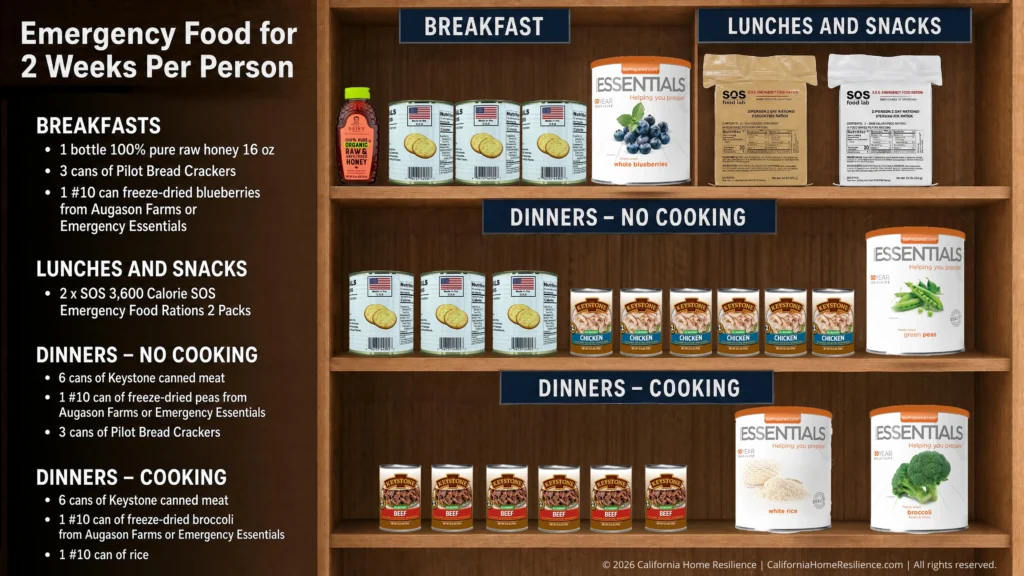
Sample No-Cook Shelf-Stable Meal Plan
Here is one example of a shelf-stable, no-cook day for one adult.
Breakfast
- 2 Pilot Bread Crackers
- 1½ tablespoons pure honey
- 1½ servings freeze-dried blueberries, eaten dry or cold-soaked
This comes out to about 380 calories.
Lunch and Snack
- 3 mini SOS emergency food bars
This provides about 1,200 calories.
Dinner Without Cooking
- Cold-soaked freeze-dried peas
- Half a can of Keystone meat
- 3 Pilot Bread Crackers
This comes out to about 640 calories.
Cold Keystone meat may not look great, but it can taste surprisingly good.
Sample Off-Grid Cooking Dinner
If you have an off-grid cooking setup, the meal gets better.
You can cold-soak the peas first, then warm them with Keystone meat by adding both to rice near the end of cooking.
If you can cook, rice makes a better dinner base than Pilot Bread Crackers, and freeze-dried broccoli is a more nutritious choice than peas.
Here is an image of Shelf Stable Meal Plans:
Type 4: MREs
A fourth type of emergency food is MREs, or meals ready to eat.
MREs are used by the U.S. military and are popular with some preppers and veterans.
The advantage is that MREs are complete meals. They average about 1,250 calories and typically include sides, a drink mix, and dessert.
The food is fully cooked and can be eaten cold. Many MREs also come with a flameless heater. You add a small amount of water, slide in the sealed entrée pouch, fold it, and place it in the cardboard instruction envelope while it warms.
That means MREs can often be eaten without a stove, pot, or other cooking setup.
MRE Shelf Life
MREs usually have a much shorter shelf life than freeze-dried meals.
Military MRE shelf life is counted from the pack date, not the inspection date.
Typical shelf life is about:
- Up to 5 years at 75°F
- About 3 years at 80°F
- Even less if stored in a hot car, garage, shed, or damp location
The inspection date is not an expiration date.
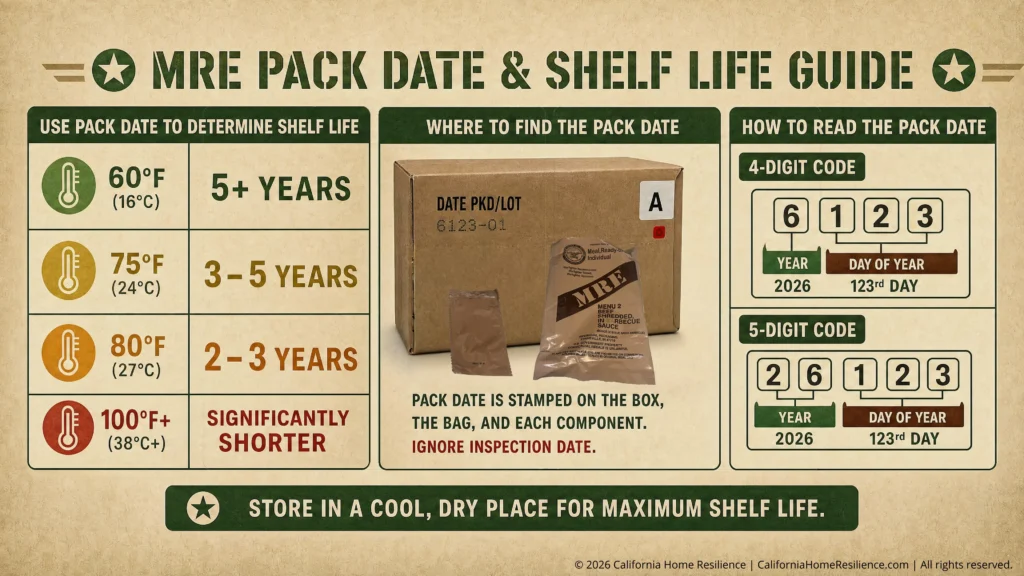
If you buy MREs secondhand, check the pack date carefully because much of their shelf life may already be gone.
Because of that shorter shelf life, MREs can cost significantly more over time. Their sensitivity to heat also makes them less reliable for long-term storage.
However, MREs are worth considering if:
- You do not have any backup cooking method
- You want complete meals
- You like variety, snacks, and desserts
- You already know you like them
- You only need something for the next few years
- You do not mind replacing them more often
Best Emergency Food Strategy for Most Families
For most families, I would not rely on only one type of emergency food.
A practical two-week emergency food supply can combine:
- Emergency food bars for easy calories
- Freeze-dried meals for better dinners
- Shelf-stable staples to lower the cost
- Canned meats for protein
- Rice or pilot bread for calories
- Freeze-dried fruits and vegetables for nutrition and variety
- MREs only if they fit your needs
You do not have to build the perfect emergency food kit all at once.
To save money, start with a one-week supply per person and build from there.
The goal is simple: have enough food stored before the emergency happens. Choose foods your family will actually eat, with enough calories and meals you can prepare during a disaster.
Final Thoughts
The best emergency food is not just the food with the longest shelf life. It is food your family will actually eat, that provides enough calories and protein, and that you can prepare when the power is out, stores are closed, roads are blocked, or refrigeration is unavailable.
For many families, the best approach is a layered system:
- Ready-to-eat calories for the first few days
- Freeze-dried meals for comfort and variety
- Shelf-stable staples for lower cost
- Protein sources that do not require refrigeration
- A backup cooking plan if possible
That gives you flexibility during earthquakes, power outages, and other emergencies.
Product links are listed above.
And if you do not yet have emergency water that can last for decades, see our emergency water guide too.